Mawhera
The LuminariesMawhera is a small parcel at the mouth of the Grey River, within the West Coast territory once commanded by Poutini Ngāi Tahu. In the novel, its significance lies both in the restricted land left to the iwi after a Crown purchase and in its place within Te Rau Tauwhare’s practice of carrying pounamu from the Arahura River to be ceremonially blessed and broken.
Geographic and territorial setting
The narrative places Mawhera at the northern mouth of the Grey River and identifies it as part of a much wider West Coast homeland. Poutini Ngāi Tahu had once held the coast from the southern fjords to the far north. Six years before the main events, the British Crown purchased this extensive territory for three hundred pounds, leaving the iwi the Arahura River, sections of its banks, and a small parcel at Mawhera. The contrast between the scale of the land transferred and the smallness of the reservation makes Mawhera a marker of the diminished territory left under Ngāi Tahu control.
The sale’s consequences are measured against the wealth that followed. Thousands of prospectors arrived, each paying a pound for a licence and ten shillings an acre for land; the gold in the rivers and sands remained so valuable that its total had not yet been calculated. Mawhera’s place in this account is therefore not simply geographical: it belongs to a landscape whose ownership and resources were reorganized for colonial settlement and mining.
Pounamu and ceremonial movement
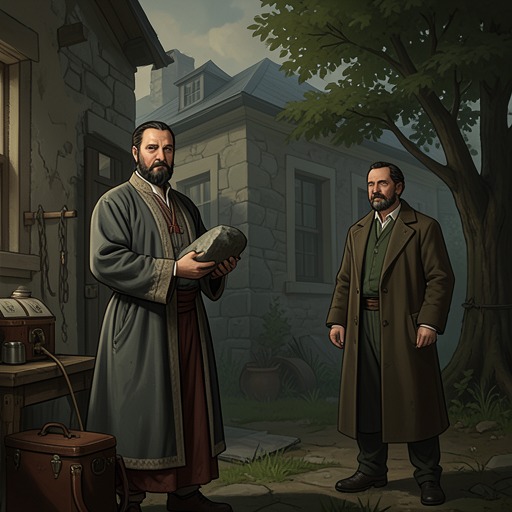
Te Rau Tauwhare travelled frequently through the Arahura Valley to hunt pounamu in the river. The stones could look smooth and milky grey on the outside while revealing a glassy green interior when split, and Tauwhare was particularly skilled at recognizing them without cutting or scratching them at the riverbank. He carried them intact back to Mawhera, where they could be blessed and broken in the ceremonial way. Mawhera is thus connected to a movement from riverbed to community ritual: the stone’s value is not exhausted by its material qualities or by the skill needed to find it.
That journey also distinguishes Tauwhare’s relation to the region from a purely commercial one. The pounamu is sought, recognized, and handled within practices that give the place and the object cultural and ceremonial significance. Mawhera functions as a destination within that relationship, rather than merely as a point on a map.
Land, ownership, and narrative significance
The account of Mawhera sits alongside the novel’s broader concern with the difference between legal title and belonging. In the Arahura Valley, land bordering the reduced Ngāi Tahu territory is bought and treated as private property; Te Rau Tauwhare objects to land being acquired for profit without being lived on or cared for. Mawhera’s status as one of the few parcels reserved to Poutini Ngāi Tahu gives that objection a concrete territorial context: legal transactions have redrawn the boundaries of a homeland, while the people’s relationship to the coast remains grounded in use, memory, and care.
The place consequently gathers two scales of the novel’s frontier story. It is a specific destination for pounamu and ceremony, and a reminder of the much larger territory curtailed by colonial purchase. Its narrative weight comes from that contrast: Mawhera remains embedded in Tauwhare’s cultural geography even as the surrounding coast is increasingly measured in licences, acreage, and gold.